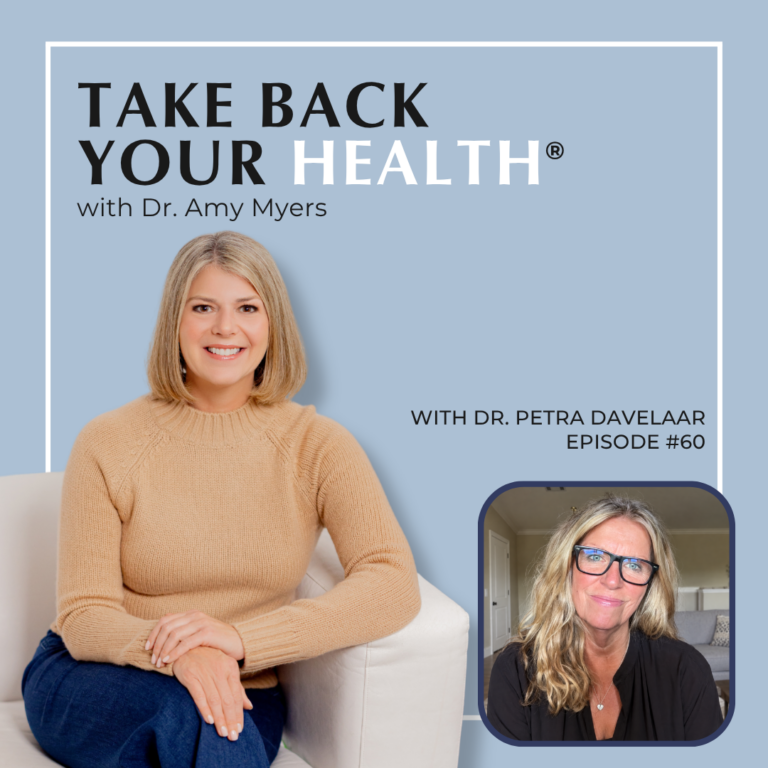
Fecal Transplants, Helminthic Therapy, and the Microbiome with Dr. Piper Dobner

Podcast Duration : 1:12:38
Podcast Publish Date : 9/30/26
What if the most important thing to understand about your gut is not one specific bacterium, but the entire ecosystem working together? In this episode of Take Back Your Health®, Dr. Amy Myers sits down with Dr. Piper Dobner, a naturopathic doctor specializing in microbiome therapeutics, for a wide-ranging conversation about the gut microbiome, helminthic therapy, and fecal microbiota transplantation.
Dr. Piper has worked in the fecal transplant space for a decade and has treated patients with recurrent and resistant C. diff infections. She explains why the microbiome is more than a collection of individual strains, how different organisms communicate with the immune system, and why restoring an ecosystem requires a broader view than simply adding one probiotic.
The conversation also explores Dr. Amy’s own experience with helminthic therapy, the difference between temporary and longer-lasting organisms, the importance of careful dosing and monitoring, how FMT capsules compare with other delivery methods, and what goes into donor screening. This episode is for anyone who wants a clearer, more nuanced understanding of microbiome-based therapies and the questions worth asking before pursuing them.
What I Cover In This Episode
- How Dr. Piper’s experience with microbiome therapeutics began.
- Why the gut microbiome is better understood as an ecosystem than as one isolated strain.
- How helminthic therapy is discussed in relation to immune balance and the internal microbiome.
- Why a low-and-slow approach matters when introducing helminths.
- What fecal microbiota transplantation is and how donor screening affects safety.
- How colonoscopic delivery, enema delivery, and frozen oral capsules differ.
- What Dr. Piper recommends for sleep, time in nature, and supporting the local food environment.
Your Gut Is an Ecosystem, Not a Single Supplement
Dr. Piper describes the microbiome as a living community that includes bacteria, fungi, protozoa, archaea, and other organisms. Instead of focusing only on one strain, she encourages listeners to think about the entire ecosystem and the metabolites it produces. Using Yellowstone National Park as an analogy, she explains how removing one important part of a system can create downstream changes throughout the environment. The same principle, she says, can help us think more clearly about how the organisms in the gut support immune education and overall function.
Helminthic Therapy and the Importance of Going Slowly
The conversation then moves into helminthic therapy, including Dr. Amy’s personal experience and Dr. Piper’s explanation of how different organisms have different life cycles and behaviors. Dr. Piper discusses human hookworm, self-limited species, the immune system’s response, and why the therapy is not something to approach casually. She emphasizes careful counseling, gradual titration, and monitoring for significant reactions rather than trying to move too quickly.
Fecal Microbiota Transplantation: Delivery Matters
Dr. Piper explains that fecal microbiota transplantation is an ancient therapy that has evolved into carefully screened, modern approaches. The episode covers colonoscopic delivery, enema delivery, and triple-encapsulated frozen oral capsules, including why the route of delivery may affect how far the material travels through the intestinal tract. She also explains how microbes work in communities and how a new microbial ecosystem may contribute functions rather than simply reproducing a donor’s exact microbiome.
What Makes a Donor Healthy?
One of the most thought-provoking parts of the conversation is the discussion of donor screening. Dr. Piper explains that defining a healthy donor requires more than looking for the absence of one current illness. Her screening process includes repeated stool testing and blood panels, attention to pathogen and antimicrobial-resistance markers, and a broader consideration of the donor’s health history and environment. The conversation also explores early-life microbial exposure, vaginal seeding, and why important research questions remain unanswered.
About Dr. Piper Dobner
Dr. Piper Dobner, NMD, MS, is a naturopathic doctor specializing in microbiome therapeutics. Her official biography states that she has worked in the fecal transplant space for a decade and has treated patients with recurrent and resistant C. diff infection. She graduated from National University of Natural Medicine with a doctoral degree in Naturopathic Medicine and a master’s degree in Integrative Medicine Research. She is also identified as the founder and physician at Biome Basics and as Head of Science & Education at SFI Health.
Resources and Links
- Dr. Piper Dobner’s Website
- About Dr. Piper
- Conditions Treated
- Become a Patient
- Biome Basics
- Dr. Piper Dobner on Instagram
- Dr. Piper Dobner on LinkedIn
- Dr. Piper Dobner’s Substack
Connect with Dr. Amy Myers
Sunlighten Sponsor Offers
🚨 Special Offer 🚨
Sunlighten is a sponsor of Take Back Your Health®. Visit Sunlighten to learn more about Sunlighten infrared saunas and access Dr. Amy’s $200 savings offer.
🚨 Exclusive Sunlighten Savings 🚨
Dr. Amy Myers has used a Sunlighten sauna for 16 years to support circulation, the body’s natural detox pathways, and relaxation. Discover Sunlighten’s mPulse Intelligent Sauna with PulseIQ™ technology, along with Amplify and the portable Solo System. Visit the Dr. Amy Myers Sunlighten offer page to save up to $2,100 plus free shipping. Use code Dr. Amy Myers.
Episode Timestamps
- 00:00 Welcome and Dr. Piper’s introduction
- 00:31 Dr. Piper’s path into fecal transplant work
- 05:01 The microbiome as an ecosystem
- 07:43 The Yellowstone analogy and the role of keystone species
- 11:37 Dr. Amy’s experience with helminthic therapy
- 13:25 What helminthic therapy involves
- 15:44 How human hookworm therapy works in the body
- 19:32 Safety, side effects, and overgrowth concerns
- 22:36 Why Dr. Piper recommends a low-and-slow approach
- 27:39 Parasites, autoimmunity, and the importance of context
- 32:49 A helminthic-therapy success story
- 38:35 What fecal microbiota transplantation is
- 40:13 FMT delivery methods and why route matters
- 45:56 Donor screening and infant microbiome research
- 48:27 Vaginal seeding, meconium, and early-life microbial exposure
- 52:03 How frozen oral FMT capsules are administered
- 55:44 Defining a healthy donor and screening for safety
- 01:01:36 Dr. Piper’s three ways to take back your health
- 01:03:20 Where to find Dr. Piper
- 01:04:18 Closing conversation