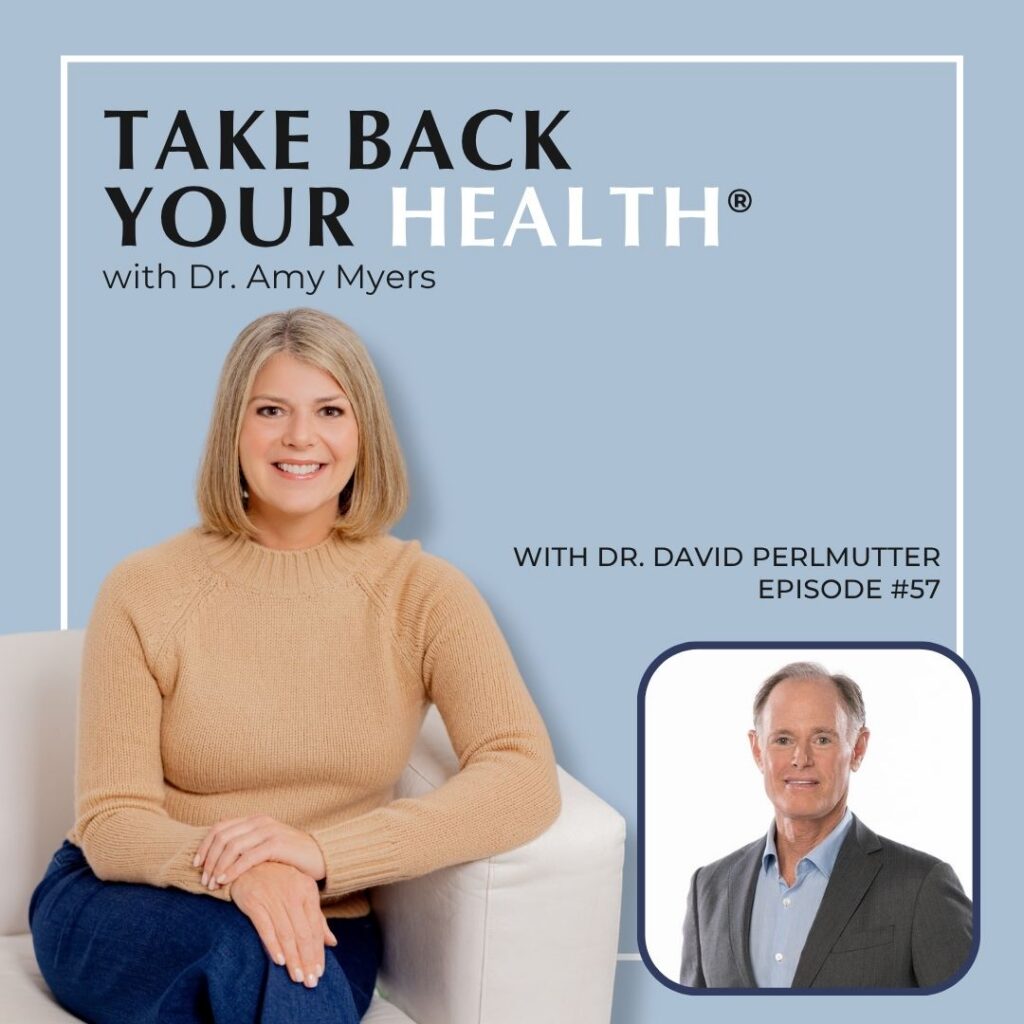
The Brain’s Immune System: How Metabolism Shapes Cognitive Health with Dr. David Perlmutter
Podcast Duration : 1:07:06
Podcast Publish Date : 9/16/26
In this episode of Take Back Your Health®, I sit down with neurologist and author Dr. David Perlmutter to explore a question that changes how we think about cognitive health: what if the brain’s future is shaped not only by genetics or age, but by the metabolic and immune signals we influence every day?
Dr. Perlmutter joins me to discuss his newest book, Brain Defenders, and the brain’s immune cells, known as microglia. We unpack how blood sugar, inflammation, sleep, exercise, diet, metabolic health, hormones, and other lifestyle inputs may influence whether these cells support the brain or contribute to a more destructive inflammatory state.
This conversation is especially important if you are thinking about cognitive health before symptoms appear. We discuss why brain-health conversations may need to begin decades before a diagnosis, how perimenopausal hormone changes intersect with microglia, why APOE4 is a risk factor rather than a predetermined outcome, and what Dr. Perlmutter wants listeners to understand about taking action now.
What I Cover In This Episode
The Missing Piece: Immunometabolism and Microglia
Dr. Perlmutter explains why he sees immunometabolism as the missing connection between lifestyle, metabolism, inflammation, and brain health. Microglia make up the brain’s immune system. In the model he describes, supportive M2 microglia help nurture synapses and maintain the blood-brain barrier, while the more destructive M1 state can damage synaptic connections and contribute to neuroinflammation. The central idea is that the metabolism of these immune cells reflects the body’s broader metabolic environment.
Blood Sugar, Inflammation, and the Tests That May Reveal Risk
The conversation moves beyond waiting for memory problems to appear. Dr. Perlmutter discusses fasting blood sugar, fasting insulin, hemoglobin A1C, homocysteine, and P-tau217 as measures he considers relevant to understanding metabolic and cognitive risk. He also explains why tools such as continuous glucose monitors can help some people learn how their own bodies respond to food and exercise. These topics are discussed as part of a broader clinical conversation—not as a substitute for individualized medical care.
Why Brain Health May Begin Before Symptoms
Dr. Perlmutter challenges the idea that brain-health work should begin only after forgetfulness or cognitive decline becomes obvious. We discuss metabolic health in the 30s and 40s, early-life sugar exposure, the gut-brain connection, and how lifestyle patterns can influence the brain long before a diagnosis. We also explore the relationship between falling estradiol during menopause, synaptic changes, and microglial activity—an especially important section for women navigating perimenopause and menopause.
Diet, Exercise, Sleep, and the Power of Consistency
Rather than prescribing one universal diet, Dr. Perlmutter emphasizes understanding what food is doing to blood sugar, while prioritizing colorful plant foods, dietary fiber, and quality fats. We also discuss exercise, restorative sleep, stress management, cognitive engagement, and social connection. He shares why consistent lifestyle inputs may be more useful than searching for a single perfect protocol.
Genetics, Emerging Therapies, and the Brain-Health Spectrum
We discuss APOE4, why genetic risk does not guarantee an outcome, and why Dr. Perlmutter describes Alzheimer’s as a spectrum that develops long before clinical forgetfulness. The conversation also touches on Alzheimer’s medications, plasma exchange, hyperbaric oxygen, mitochondrial function, and the importance of separating promising research from blanket recommendations. The episode closes with three practical ways to take back your brain: recognize that your choices matter, understand the connection between lifestyle and the brain’s immune system, and protect the social relationships that support long-term brain health.
About Dr. David Perlmutter
Dr. David Perlmutter is a board-certified neurologist and author whose work focuses on brain health, nutrition, metabolic health, and neurodegenerative disorders. His official website identifies Brain Defenders as his most recent book and describes it as a work centered on the brain’s immune cells and their relationship to long-term brain health.
Resources and People Mentioned
- Dr. David Perlmutter’s official website: https://drperlmutter.com/
- Brain Defenders official book website: https://braindefenders.com/
- Dr. David Perlmutter on Instagram: https://www.instagram.com/davidperlmutter/?hl=en
Connect with Dr. Myers
- Website: https://www.dramymyers.com/
- Dr. Myers’ Inner Circle: https://www.drmyersinnercircle.com
- Newsletter: https://dramymyers.com/
- Facebook: https://www.facebook.com/dramymyers
- Instagram: https://www.instagram.com/dramymyers
Connect with Dr. David Perlmutter
- Website: https://drperlmutter.com/
- Instagram: https://www.instagram.com/davidperlmutter/?hl=en
🚨 Special Offer 🚨
Sunlighten is a sponsor of Take Back Your Health®. Visit Sunlighten to learn more about Sunlighten infrared saunas and access Dr. Amy’s $200 savings offer.
🚨 Exclusive Sunlighten Savings 🚨
Dr. Amy Myers has used a Sunlighten sauna for 16 years to support circulation, the body’s natural detox pathways, and relaxation. Discover Sunlighten’s mPulse Intelligent Sauna with PulseIQ™ technology, along with Amplify and the portable Solo System. Visit the Dr. Amy Myers Sunlighten offer page to save up to $2,100 plus free shipping. Use code Dr. Amy Myers.
Episode Timestamps
- 00:00 — Welcome and Dr. Perlmutter’s return to the podcast
- 01:03 — From mainstream neurology to root-cause exploration
- 03:30 — Leaving conventional practice and building an integrative neurology clinic
- 04:49 — Grain Brain and lifestyle’s influence on brain health
- 05:53 — Metabolism, inflammation, and the brain’s immune system
- 08:04 — Immunometabolism as the missing piece
- 10:50 — Lifestyle choices, genetics, and brain health
- 12:14 — What microglia are and their M2 versus M1 states
- 14:50 — TSPO imaging and surrogate markers of microglial activation
- 17:18 — P-tau217, fasting insulin, homocysteine, and A1C
- 18:00 — When brain-health prevention should begin
- 20:43 — Early-life sugar exposure, the microbiome, and immune regulation
- 23:11 — Why humans seek sweet foods and how fructose affects metabolism
- 25:10 — Diet, blood-sugar monitoring, CGMs, fiber, and healthy fats
- 27:59 — Perimenopause, estrogen, microglia, and brain changes
- 31:02 — Metabolic health before menopause
- 36:18 — Lifestyle intervention, exercise, stress management, and cognition
- 38:39 — Alzheimer’s medications, benefit-risk questions, and prevention
- 41:45 — Alzheimer’s as a spectrum and the discussion of plasma exchange
- 44:11 — Epigenetic-age interventions and the role of exercise
- 46:21 — Hyperbaric oxygen, mitochondria, blood flow, and brain health
- 48:48 — Glycation, blood sugar, and shifting microglia toward support
- 50:17 — Testing, lifestyle changes, and the brain-health spectrum
- 51:45 — Modifiable risk factors, genetics, and APOE4
- 55:59 — Dr. Perlmutter’s three ways to take back your brain
- 56:58 — Brain Defenders, official website, and where to find Dr. Perlmutter
- 57:42 — Closing thanks