The Menopause-Gut Connection: How Your Microbiome Shapes Midlife Health with Cynthia Thurlow
Podcast Duration : 1:10:58
Podcast Publish Date : 10/28/26
Menopause is not only a conversation about hot flashes, bone density, or reproductive hormones. It is also a major transition for the gut, immune system, brain, metabolism, and the way your body processes estrogen.
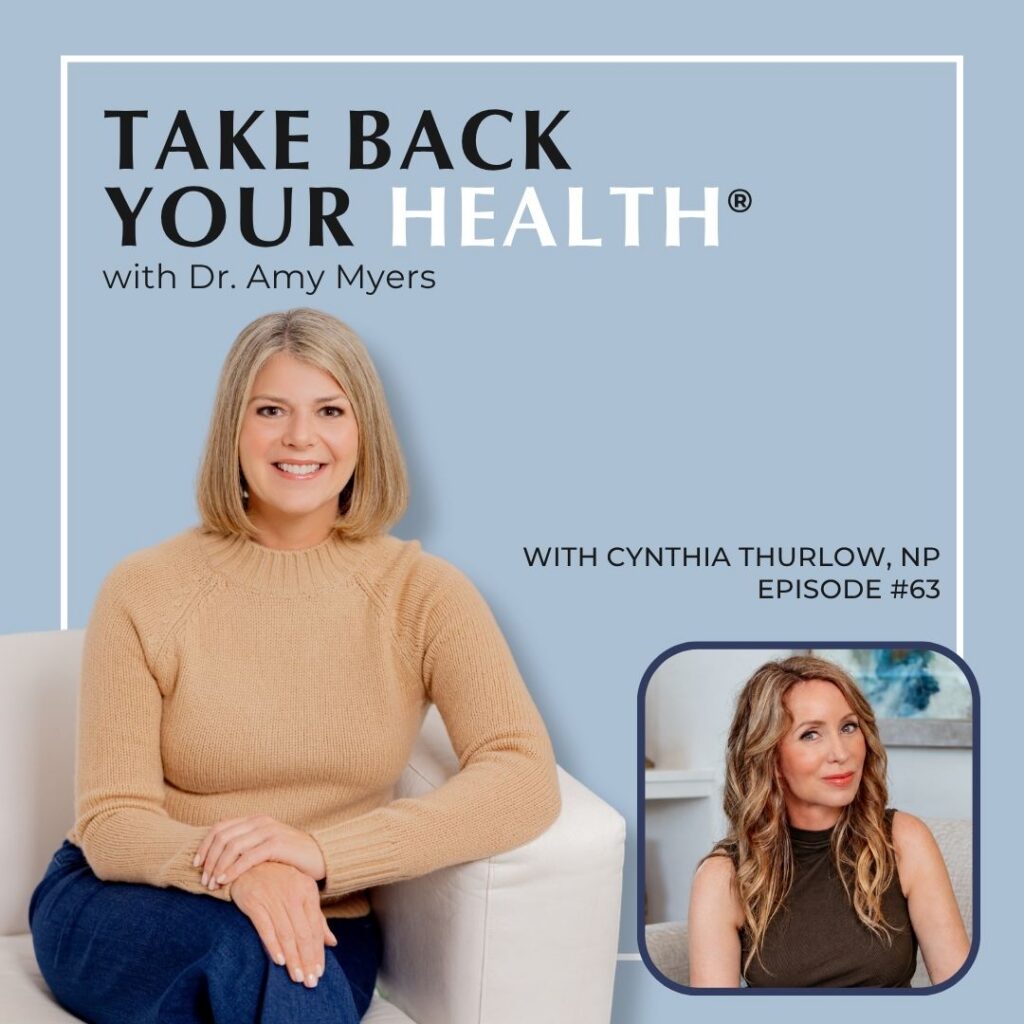
In this episode of Take Back Your Health®, Dr. Amy Myers sits down with Cynthia Thurlow, NP, to explore the connection between the gut microbiome and women’s health through perimenopause and menopause. Cynthia’s perspective is personal. After a severe gastrointestinal illness led to a 13-day hospitalization, a ruptured appendix, pancolitis, Giardia, significant weight loss, and years of recovery, she began asking deeper questions about the gut, hormones, and immune system.
Dr. Amy and Cynthia discuss the estrobolome, the gut-brain and gut-ovarian axes, trauma, hormone replacement therapy, testing, protein, fiber, fasting, and the importance of bio-individuality. This conversation is for women who have been told that bloating, constipation, brain fog, weight changes, or worsening menopause symptoms are simply something they have to accept.
What I Cover In This Episode
- How a severe gastrointestinal illness changed Cynthia’s understanding of the gut and menopause.
- What the estrobolome is and how it helps process estrogen.
- Why constipation, bloating, brain fog, skin changes, and weight resistance may deserve a deeper look.
- How the gut, brain, ovaries, immune system, and hormones communicate.
- Why trauma and chronic stress can affect the menopause transition.
- How Cynthia thinks about hormone testing, hormone replacement therapy, protein, fiber, and fasting.
- Cynthia’s three practical ways to take back your health.
The Health Crisis That Changed Cynthia’s Work
Cynthia begins by sharing the story of a serious illness that started after a trip to Morocco and Spain. She initially thought she had food poisoning, but repeated illness eventually led to a 13-day hospitalization. She had a ruptured appendix, pancolitis, a small bowel obstruction, and multiple complications. After leaving the hospital, she later learned that Giardia had contributed to the prolonged illness.
Cynthia describes losing significant weight, struggling to absorb food, and spending years rebuilding her strength. The experience made her look differently at what happens when the gut, immune system, and hormones are all under strain. She also realized that even with clinical training, she had not been taught enough about how declining estrogen can influence the microbiome and immune function during midlife.
The Estrobolome and Estrogen Processing
A central concept in this episode is the estrobolome: a group of bacteria within the gut microbiome involved in processing estrogen. Cynthia explains that the gut acts as an important part of the body’s broader detoxification process. When the microbiome is disrupted, estrogen may be processed and recirculated differently, which can influence how a woman experiences the menopause transition.
The conversation connects this idea to bowel regularity, fiber, hydration, diet, environmental exposures, medications, synthetic hormones, and stress. Cynthia and Dr. Amy emphasize that the relationship is not as simple as having “too much” or “too little” estrogen. The goal is to understand the individual context and identify the factors that may be affecting symptoms and estrogen metabolism.
Gut Symptoms, Brain Fog, and the Gut-Brain Axis
The gut and brain communicate constantly through pathways that include the vagus nerve, immune signaling, and neurotransmitter production. Cynthia and Dr. Amy discuss how gut inflammation and changes in the intestinal barrier may affect brain fog, mood, anxiety, and cognition. They also talk about why new bloating, constipation, diarrhea, skin changes, or weight resistance should not automatically be dismissed as an unavoidable part of aging.
The episode does not suggest that every symptom has one cause. Instead, it encourages a more complete evaluation after serious conditions have been ruled out. Gut health, sleep, stress, muscle mass, insulin sensitivity, infections, trauma, and hormone changes can all be part of the picture. Cynthia’s message is to become more attentive to what the body is communicating and to bring that information to a qualified practitioner.
Trauma, Stress, and the Gut-Ovarian Axis
Cynthia and Dr. Amy discuss the difference between major trauma and the cumulative effect of smaller experiences such as neglect, chronic stress, or growing up around addiction. These experiences can influence the autonomic nervous system and the way the body responds to perceived threats.
They explore the gut-ovarian connection and the possibility that chronic stress and high adverse childhood experience scores may shape the menopause transition. Cynthia describes perimenopause as a period that can expose coping strategies that once worked but no longer fit the body’s changing physiology. The answer is not self-blame. It is an invitation to understand what is changing and to seek support for the physical and emotional parts of the transition.
Hormone Therapy, Testing, and Bio-Individuality
The conversation also addresses the long shadow of the Women’s Health Initiative and the way its findings influenced how an entire generation viewed hormone replacement therapy. Cynthia and Dr. Amy discuss why women deserve an informed conversation with a qualified prescriber about their individual risks, symptoms, goals, and options.
They touch on transdermal and oral hormone options, vaginal estrogen, progesterone, testosterone, hormone testing, and concerns about dosing methods such as pellets. The central message is not that one hormone or delivery method is right for every woman. It is that women should work with practitioners who understand menopause and can explain the evidence while considering the whole person.
Cynthia also shares how her own approach has evolved. In menopause, she has found that some patients do better with more nourishment, enough protein, carbohydrates that work for their bodies, and a shorter period of digestive rest rather than automatically extending an intermittent fast. This is a practical example of bio-individuality: a strategy that helped during one life stage may need to change in another.
About Cynthia Thurlow, NP
Cynthia Thurlow is a nurse practitioner, nutrition educator, perimenopause and menopause expert, and host of the Everyday Wellness podcast. Her official biography states that she worked in emergency and cardiology settings for nearly 20 years and completed advanced training in nutrition and functional testing. She is the author of The Menopause Gut: Balance Your Microbiome to Reclaim Your Health in Midlife and Beyond and Intermittent Fasting Transformation.
Resources and Links
- Cynthia Thurlow’s Official Website
- About Cynthia Thurlow
- The Menopause Gut
- Everyday Wellness Podcast
- Everyday Wellness on Spotify
- Everyday Wellness on Apple Podcasts
- Purchase The Menopause Gut: Balance Your Microbiome to Reclaim Your Health in Midlife and Beyond by Cynthia Thurlow on Amazon.
Connect with Cynthia Thurlow
Connect with Dr. Amy Myers
Sunlighten Sponsor Offers
🚨 Special Offer 🚨
Sunlighten is a sponsor of Take Back Your Health®. Visit Sunlighten to learn more about Sunlighten infrared saunas and access Dr. Amy’s $200 savings offer.
🚨 Exclusive Sunlighten Savings 🚨
Dr. Amy Myers has used a Sunlighten sauna for 16 years to support circulation, the body’s natural detox pathways, and relaxation. Discover Sunlighten’s mPulse Intelligent Sauna with PulseIQ™ technology, along with Amplify and the portable Solo System. Visit the Dr. Amy Myers Sunlighten offer page to save up to $2,100 plus free shipping. Use code Dr. Amy Myers.
Episode Timestamps
- 00:00 Welcome and why the menopause-gut conversation matters
- 02:34 Cynthia’s travel illness and the beginning of her health crisis
- 04:21 Hospitalization, ruptured appendix, pancolitis, and complications
- 06:31 Giardia, weight loss, and the effects of declining estrogen
- 08:09 Why the gut microbiome matters in midlife
- 10:14 What the estrobolome does
- 11:31 Constipation, estrogen processing, and the Goldilocks effect
- 13:44 Estrogen metabolites, detox pathways, and environmental exposures
- 16:29 How diet, stress, and lifestyle influence the estrobolome
- 17:10 Estrogen recirculation and menopause symptoms
- 18:32 The gut-brain connection and neurotransmitters
- 20:22 Food poisoning, inflammation, and brain fog
- 22:52 Infection, microbiome disruption, and mood changes
- 25:09 Bio-individuality and healing the gut
- 26:36 Bloating, bowel changes, brain fog, and weight resistance
- 29:19 Trauma and the gut-ovarian axis
- 32:16 ACE scores, chronic stress, and perimenopause
- 34:16 Earlier menopause and high-stress professions
- 36:31 Why women were taught to suffer in silence
- 38:23 WHI data and the hormone-replacement conversation
- 40:35 Transdermal versus oral hormone options and genitourinary menopause
- 41:26 Why estrogen affects more than bones
- 42:35 Progesterone, testosterone, cognition, and menopause
- 45:43 Testing hormones in context
- 46:31 Finding a practitioner comfortable with hormone therapy
- 49:09 Hormone delivery methods and dosing concerns
- 53:37 Digestive rest, protein, and fasting in menopause
- 54:35 Bio-individual protein and carbohydrate needs
- 55:02 When intermittent fasting works—and when it does not
- 56:15 Protein, carbohydrates, sleep, and performance
- 58:37 Changing your approach as your body changes
- 59:21 Cynthia’s three ways to take back your health
- 01:00:05 Fiber, estrogen elimination, and bone health
- 01:00:24 Healthy boundaries and peace of mind
- 01:01:24 Where to find Cynthia
- 01:02:08 Closing conversation